From Executive Order 9066 to the Camps
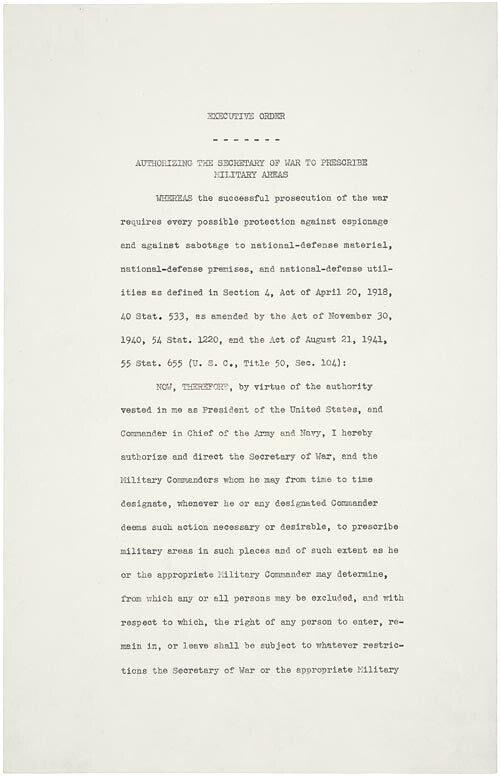
Executive Order 9066
Pearl Harbour had led to a surge of worry within the population about the loyalty of many of the civilians. Overall, this ultimately led to Executive Order 9066 being introduced on the 19th of February 1942, and later the eventual evacuation of all Japanese Americans from the West Coast of the United States. [1]
What is important to understand that the Order does not state any particular ethnic group, however Japanese Americans were disproportionately collected. While up to 25,000 German Americans were detained across the U.S. and Latin America, 120,000 Japanese Americans in the U.S. alone had ended up within the internment camps. [2] For further reading about the number of German and Italian Americans can be done through Marc Becker's work in 'The FBI's role in expelling Germans from Ecuador during the 1940s' in the Bulletin of Latin American Research.

Differing opinions
Due to the uniqueness of the situation ,there was a difference in opinions regarding how the issue of Nikkei loyalty to the United States should be addressed. Politicians like J. Egdar Hoover had already felt the FBI were containing the problem without extra interference. [3]
However, there have been others who were more supportive of segregating the Nikkei population due to the belief that many were disloyal. An example of which is historian Lillian Baker, who has always downplayed the internment period for the Nikkei Community. [4]
While there are multiple arguments for and against internment, if the concept for internment was due to the issue that many in the Nikkei community were not born in the country or that they were disloyal, then the purpose would be a waste of the United States' time. Up to 80,000 of the 120,000 Japanese population were born in the country- demonstrating that they were not "enemy aliens" and were in fact American citizens. [5] In regard to the loyalty question, there had been thorough reports of the time surfacing that support the idea that there were no genuine concerns about the loyalty the community held, such as C.B. Munson's report. [6]
Underprepared
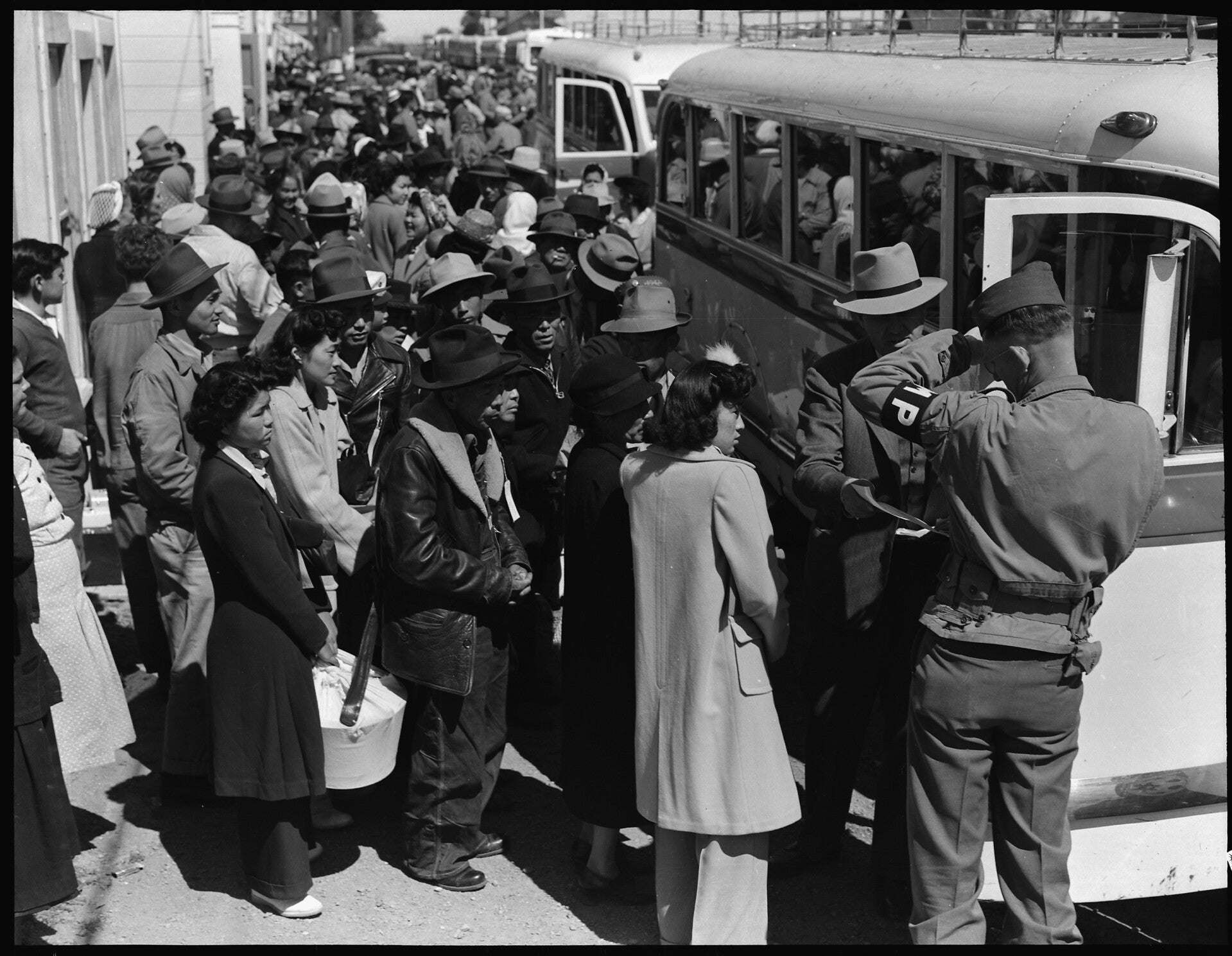
What was interesting was the lack of preparedness the entire situation had demonstrated. Initially people were expected to organise themselves with their homes and land, however people were evacuated at such fast rates that many ended up losing their homes and overall suffered great financial loss. [7] Properties were not transferred fast enough, but they were lucky enough to be given help in finding tenants for their farms. [8]
The lack of preparedness followed into the initial arrival to the camps as many of the barracks where people were staying in had not been finished, leading to extreme crowdedness in the barracks. [9]
References
[1] National Archives, Record Group 11, 5730250 ‘Executive Order 9066 dated February 19, 1942, in which President Franklin D. Roosevelt authorizes the Secretary of War to prescribe military areas’ <https://www.archives.gov/milestone-documents/executive-order-9066>
[2] Marc Becker, ‘The FBI’s role in expelling Germans from Ecuador during the 1940s’, Bulletin of Latin American Research, Vol. 37, No. 3 (2018), p. 306.
[3] Mikiso Hane, ‘Wartime Internment’, The Journal of American History, Vol. 77, No. 2 (1990), p. 571 https://doi.org/10.2307/2079186
[4] Lillian Baker, Dishonoring America: the collective guilt of American Japanese (Webb Research Group, 1988)
[5] United States Census Bureau, 1940 Census of a population: characteristics of the nonwhite population by race, ‘Sixteenth census of the United Sates: 1940’, 2021 <https://www.census.gov/library/publications/1943/dec/population-nonwhite.html>
[6] Densho Digital Repository, denshopd-i67-00011, ‘Memorandum on C. B. Munson’s report on ‘Japanese on the West Coast’, November 1941’, 2026 <https://ddr.densho.org/ddr-densho-67-11/>
[7] PBS, The National Parks, Manzanar: “Never Again”, 2009 <https://www.youtube.com/watch?v=XgmY2P-xT_Y>
[8] Internet Archive, U.S. Office of War Information, 593, Japanese Relocation, 2002 <https://archive.org/details/Japanese1943>
[9] Brian Niiya, Densho Encyclopedia, Manzanar, 2026, <https://encyclopedia.densho.org/Manzanar/>.
Create Your Own Website With Webador